Rehab on the Mic: Comprehend Podcast

Conversations with clinicians on caseloads, documentation, practice ownership, and the realities of patient care.
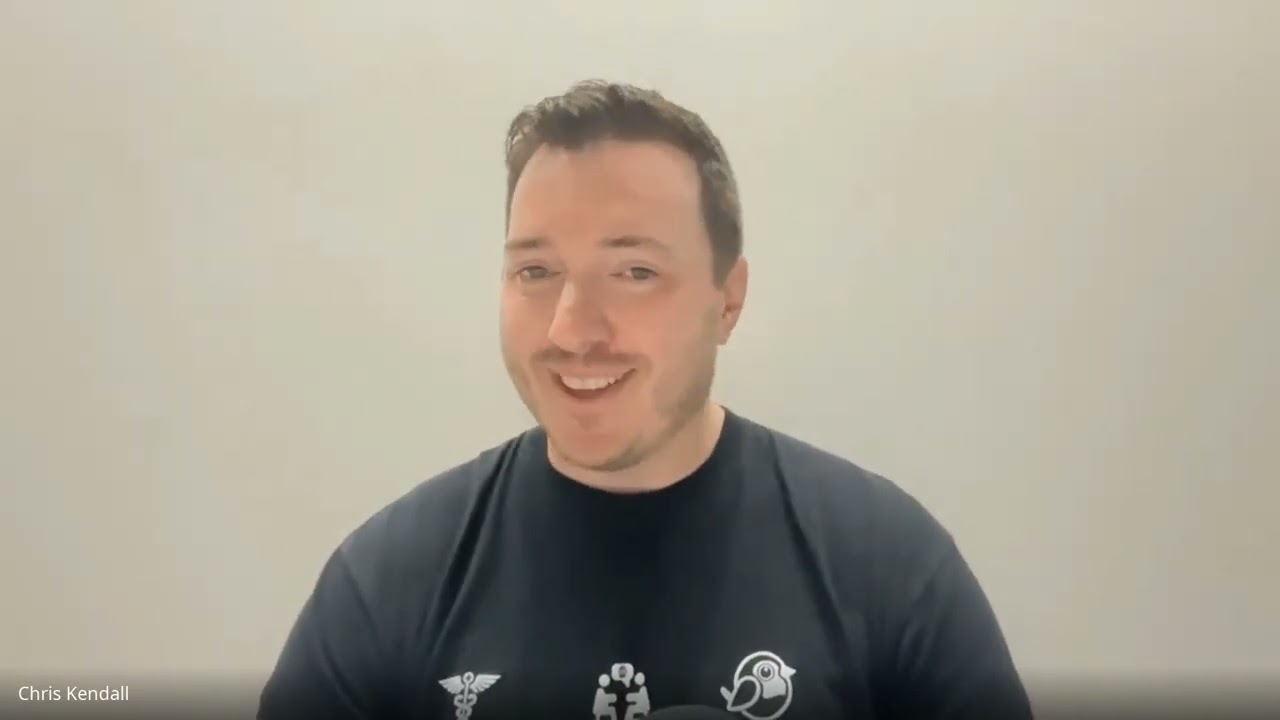
Larry Adegoke, Yankees assistant MLB strength and conditioning coach, on Rehab on the Mic
7

Inside the Yankees’ Training Room | Larry Adegoke, MLB Strength Coach

Newest
September 4, 2026
Asst. MLB Strength & Conditioning Coach, New York Yankees — LMT

Force plates, acute-to-chronic workload, and scope lines on a pro baseball staff.
Larry Adegoke is an assistant major league strength and conditioning coach for the New York Yankees, and a licensed massage therapist. He came out of a hockey background rather than baseball, got in through performance science in 2015, and worked up from rookie ball in Pulaski to the majors in 2023. In this episode he gets specific about the tools that actually drive decisions on a pro staff — force plate metrics, acute-to-chronic workload ratios — and how a strength coach reads that data across a long season. He's also candid about where the scope lines sit between strength and conditioning, manual therapy, and the PTs and ATs on staff, and what it takes to keep those handoffs working.

Matt Huey, PT, on Rehab on the Mic
6

The Serious Clinician Behind the Funny Videos

Newest
August 21, 2026
PT, DPT — MDT Diplomate, FAAOMPT

What McKenzie actually is, hard referrals, and making clinical content land.
Matt Huey has been a PT for sixteen years — an MDT diplomate, FAAOMPT fellow, and the person behind some of the most widely shared physical therapy memes on Instagram. He started making them in 2019 purely as a creative outlet. Here he explains what McKenzie actually is versus the press-ups-and-retractions caricature it's been reduced to, why he takes the hardest long-standing neck and back referrals other clinicians can't solve, and how he thinks about clinical content: chop a five-minute idea into twenty sixty-second pieces, and set boundaries on how much of your life you hand over.

Chad Guerrero, OT, on Rehab on the Mic
5

The OT Redefining the Rehab Space and his Audit-Proof Notes

Newest
August 14, 2026
OT — Practice Owner, Ortho OT

An OT in the ortho world, earning con-ed access, and winning back documentation time.
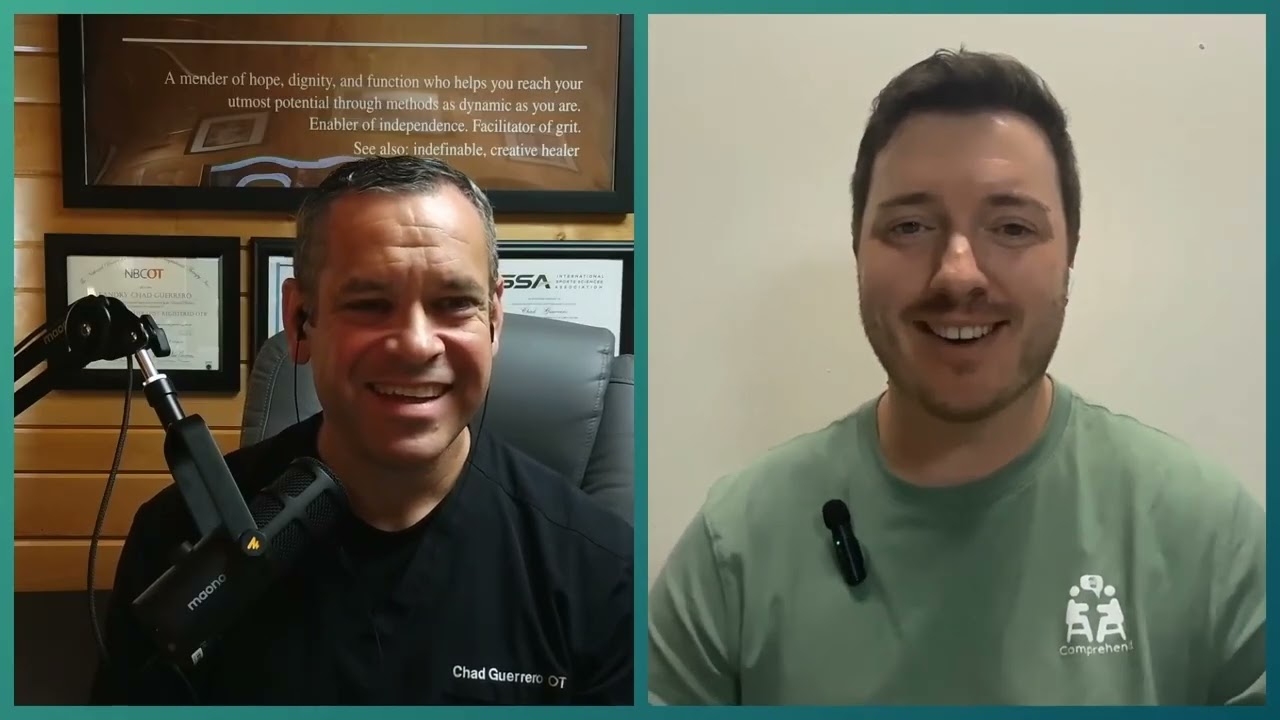
Chad Guerrero is an OT who built an orthopedic and sports practice, which draws the question he gets constantly: why not PT school? The answer involves a bad elbow injury, a program with a Tulane Medical Center agreement where physicians taught most of the coursework, and a con-ed organization he successfully petitioned to let OTs take the lumbar and lower body courses. He owns Guerrero Rehabilitation, has roughly 115,000 YouTube subscribers and averages four to six million Instagram views a month, and edits all of it himself. The back half covers his documentation workflow in detail, including what happened when a third-party auditor reviewed his notes.

Chris O'Neal, PGA Tour physical therapist, on Rehab on the Mic
4

Rotation, Power, and Pain: PGA TOUR PT

Newest
August 7, 2026
PT, DPT — PGA & Korn Ferry Tour

How he got hired on tour, and what a tournament week actually looks like.
Chris O'Neal came to physical therapy sideways — a business undergrad, eight years in healthcare recruitment, then PT school in 2020. Four years later he's on the PGA and Korn Ferry Tour therapy staff and owns his own practice in Jupiter, Florida. The path there is the best story in the episode: he started booking tee times with only one slot open so he'd meet three strangers every round, which led to a caddying job at the Senior PGA, which led to him faking a knee-taping appointment at the tour's therapy truck to get in front of the staff. He also details what a tournament week actually looks like — 5:45am tee times, fifteen to thirty treatments a day — and argues the soft skills matter more than the manual therapy.

Justin Farnsworth on programming around pain, on Rehab on the Mic
3

From Treating Pro Athletes to Programming Around Pain

Newest
August 4, 2026
PT, DPT — Board Certified, Sports

Why rehab underdoses patients, and how to find a real entry point for loading.
Justin Farnsworth coached athletes from age twelve before he was ever a clinician, and he argues that background is what most therapists are missing. His case is blunt: rehab systematically underdoses patients, parking them on clamshells and two-pound cuff weights long after they've walked into the clinic carrying their own body weight. He explains the framework behind his two courses — Programming Around Pain for coaches and Rehab Rebuild for clinicians — and the backyard-to-front-yard metaphor he uses to find a patient's real entry point for loading, then progress from it. Also covers what to look for in continuing education, and why online courses can't teach a hands-on skill.

The 7 Figure Cash Practice - William Schopp on Rehab on the Mic
2

The 7 Figure Cash Practice

Newest
August 4, 2026
PT, DPT — Cash Practice Owner

From a 400 sq ft room to seven figures — funnel KPIs and client experience.
William Schopp opened The Movement Shop in May 2020 with about $5,000 and a 400 square foot room. It's now a seven-figure cash practice with seven clinicians plus admin, sales, and marketing staff. He walks through the funnel metrics he actually tracks — lead to discovery call, call to booked eval, eval to package sold, targeting 33% lead-to-package — and why cost per lead is meaningless without them. He also breaks down the five-senses client experience system, from a scent machine in the lobby to asking every new patient their favorite music on the intake form, and explains why he hires and fires on culture rather than clinical skill.

The Origin Story - Jake Michalski and Chris Kendall on Rehab on the Mic
1

The Origin Story

Newest
August 4, 2026
CEO / Co-founder, PT, DPT

Building an AI scribe for clinicians — from a Christmas dinner note to a working product.

Jake Michalski and Chris Kendall are cousins. Years before Comprehend existed, Chris complained about documentation over Christmas dinner and Jake — then heading into college — wrote a note in his phone that AI would eventually be good at this. In this episode they trace what happened next: the first proof of concept in October 2022, a Python script wired to GPT-2 and a free transcription API, demoed on Jake's mom. Jake quit his engineering job in August 2023 after nine months of moonlighting, and the real inflection didn't come until late 2024, when foundation models finally got good enough that the EMR integrations they'd already built on worse models suddenly worked.